Basic Matters Concerning Academic Studies
Course Subjects and Credit Calculation Methods
Courses at Kochi University are categorized into: (1) First-Year Courses, (2) Liberal Arts Courses, and (3) Major Courses. Of these, courses (1) and (2) are offered as part of the general education curriculum, while course (3) is offered as part of the major curriculum.
The types of classes are as follows:
1) Lectures: A class format centered on instruction by the instructor.
2) Seminars: A class format centered on student-led learning.
3)Practicum: A class format centered on students learning through hands-on experience or working with actual objects, or on acquiring practical skills and techniques.
4) Laboratory: A class format conducted through experiments.
5) Practical Training: A class format conducted through practical training.
The university’s credit system is structured such that one credit represents 45 hours of learning, comprising (1) the time spent in class with an instructor and (2) the time spent by students on preparatory study and review outside of class before and after the session.
For each course, the university sets the number of class hours based on this standard of 45 hours of study per credit: for lectures and seminars, within the range of 15 to 30 hours; and for practical training, experiments, and practical skills, within the range of 30 to 45 hours.
Based on this, our university conducts at least 15 hours of instruction per credit for lectures and seminars (30 hours for certain seminars) and at least 30 hours for practical training, experiments, and practical skills. The remaining time, up to 45 hours, is designated for students’ independent study (preparation and review). However, for practical skills courses involving individual instruction in fields such as the arts, the time required per credit is determined separately.Furthermore, courses such as graduation theses, graduation research, and graduation projects are conducted independently of the class hour requirements outlined above.
The following is a standard example of how credits are calculated.
| Course Categories | Number of credits | Number of class hours | Guidelines for the number of hours of independent study by students | Total |
| Lectures and seminars | 1 credit | 15 hours | 30 hours | 45 hours |
| 2 credits | 30 hours | 60 hours | 90 hours | |
| Practical Training, Experiments, and Hands-On Skills | 1 credit | 30 hours | 15 hours | 45 hours |
| 2 credits | 60 hours | 30 hours | 90 hours |
For the purpose of determining credit hours, the university considers one 90-minute class period to be equivalent to two hours of study time. Both the first and second semesters consist of 15 weeks each, excluding exam periods. For example, a two-credit course requires 60 hours of independent study in addition to 15 weeks of 90-minute classes (30 hours).
Course Registration and Grading
授業科目を履修し、単位を修得するためには履修登録が必要です。登録にあたっては登録できる年次、クラスが指定された科目や、必修単位として修得しなければ卒業できない科目等があり注意が必要です。
また、履修登録できていない科目を履修しても、単位は認定(単位修得)されません。履修登録は一部の科目を除き、教務情報システムKULAS(WEB方式)で行います。新入生については、4月の履修登録時期に「教務情報システムKULAS操作説明会」を行いますので必ず出席してください。
本学は、共通教育と専門教育の一貫教育です。入学年度により、教育課程(カリキュラム)が異なりますので、先輩達のアドバイスを鵜呑みにしないで、不明な点は必ず担当学部の窓口で確認してください。なお、詳しくは共通教育及び各学部の『履修案内』等を参照してください。
As a general rule, grades for courses are evaluated on a 100-point scale based on exams, reports, and other assignments conducted each semester. A score of 60 or higher is considered a passing grade, and credits are awarded. The grading criteria are outlined in the table below. Since grading methods vary by course, please refer to the “Grading Method” section of the syllabus.Some courses may be graded on a pass/fail basis.
Please note that all registered courses are subject to grading. Grades will be assigned even in the following cases unless the course registration is canceled within the designated period.
① If the student does not meet the eligibility requirements (attendance of at least two-thirds of the total class hours)
② If the student withdraws from the course midway through the term
③ If the student is registered for the course but has not attended a single class
Grading Criteria
| Pass/Fail | Review | Rating | Criteria |
|---|---|---|---|
| Passed | Hide | 90–100 points | Achievements that demonstrate a thorough understanding and mastery of the knowledge, skills, and concepts outlined in the learning objectives, and that far exceed the standard level of achievement |
| Yu | 80–89 points | Achieving results that exceed the standard level of attainment, demonstrating a thorough understanding of the knowledge, skills, and concepts outlined in the learning objectives | |
| Good | 70–79 points | A grade indicating that the student has understood and grasped the knowledge, skills, and ways of thinking outlined in the learning objectives, is able to apply them to assigned tasks, and has achieved a level of proficiency generally considered standard. | |
| Yes | 60–69 points | A grade that indicates the student has understood and grasped the knowledge, skills, and ways of thinking outlined in the learning objectives, even though their performance falls below the standard level of achievement | |
| Failed | Not allowed | 59 points or less | Grades that indicate the student has not demonstrated an understanding or grasp of the knowledge, skills, and concepts outlined in the learning objectives, and are therefore deemed insufficient for earning course credit |
成績評価の結果は、学期ごとに大学が定める期日以降において、教務情報システムKULAS、e-ポートフォリオまたは証明書自動発行機からの「個別成績表」の取得により、評点(0~100点)及び評価(秀・優・良・可・不可)の確認を行うことができます。
各学期の成績公開日については、各学期末に公用掲示板及び教務情報システムKULASのWEB 掲示板にてお知らせします。
なお、「成績証明書」には「不可」の科目は表示されません。
また、原則として、1年に1度、3月中旬頃に保護者の方へ「個別成績表」を送付し、成績を通知します。※学部生のみ
GPA
Our university uses the GPA (Grade Point Average) as one method of evaluating students' academic performance.While there are various methods for calculating GPA, our university uses a method called "functional GPA," which calculates the GPA for eligible courses using the following formula. However, for courses in which a student receives a failing grade of 59 points or less, the calculation "course score minus 55" is uniformly set to zero. Additionally, the GPA is rounded to the nearest hundredth.
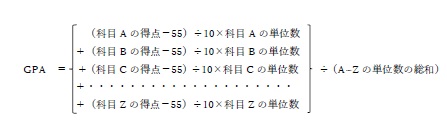
The GPA calculated using the method described above is used in various contexts, such as determining which students qualify for special exemptions from the maximum credit limit based on academic excellence, establishing academic standards for tuition waivers, and identifying students facing academic difficulties at an early stage. Leaving courses registered but not attended will lower your GPA. If you decide not to take a course, please be sure to complete the withdrawal procedure by the withdrawal deadline.
Double enrollment
同じ授業科目を履修したり、あるいは、名称が違っていても同じ授業科目とみなされるものを履修すれば「二重履修」となり、修得した単位については、卒業要件の単位としては1科目の単位としてしか認められません。詳細については共通教育および各学部の『履修案内』等を参照してください。
Maximum number of credits
The maximum number of credits you may register for each semester is 22. This limit is set to ensure that students can properly complete the required courses, and you may not register for more than this maximum number of credits.
However, courses offered in an intensive format are generally not subject to this credit limit. Additionally, students recognized as high achievers may apply to register for more than the maximum number of credits.
Make-up exam
If you are unable to take a scheduled exam for a valid reason, you may be eligible to be evaluated through a makeup exam or similar arrangement, provided you submit a request in advance (or, if you were unable to do so in advance, within one week after the exam has ended). For details, please refer to the "Course Guide" or similar materials.
Appeals Regarding Grade Evaluations
自らの成績評価について、成績の誤記入等、教員の誤りと思われる場合、シラバスや授業等により周知されている到達基準や成績評価方法から逸脱した評価であると思われる場合は、成績公表後、所定の期間内(当該科目の開設学部等により、5日~7日以内)に授業担当教員あるいは教務担当事務に問い合わせをすることができます。また、問い合わせの回答に納得できない、もしくは回答期間内に回答がない場合等は、異議申し立てを行うことができます。詳しくは『履修案内』等で確認してください。
Special Absence
親族の死去や教育実習などの修学上の理由等により、授業に出席できないときは、通常の出席扱いにはなりませんが、試験の受験資格の際に考慮されます。この場合は、学生サービスセンターの学務課内各学部教務係又は共通教育担当窓口(岡豊キャンパスは学生課、物部キャンパスは物部総務課学務室)まで申し出てください。また、課外活動においての授業配慮についても、同様の手続が必要です。
Student Guidelines for Course Registration and Exams
Please approach classes and exams with a serious and responsible attitude. In particular, regarding academic evaluation, anyone found to have committed academic dishonesty during exams or other assessments will, as a general rule, be subject to disciplinary action. Severe measures may be taken, such as invalidating not only the specific course but all courses taken during that semester.
Please be sure to read the guidelines below.
Student Guidelines for Course Registration and Exams
学士課程運営委員会
大学院総合人間自然科学研究科教務委員会
1.学生は、履修登録を行った授業科目を受講することができる。
2.学生は、受講に際しては、授業担当教員の指示に従い、授業の出席確認を受けること。
3.各授業科目における成績評価の方法は、試験、レポート課題等授業科目ごとに異なる。学生は、必ずシラバスを確認すること。
4.学生は、履修登録を行った授業科目の成績評価を受けることができる。評価方法が試験の場合、試験に臨む学生は、授業担当教員の指示に従い、次の事項を遵守すること。
1) 必ず学生証を携行し、試験中は机上に置くこと。試験当日に学生証を所持していない場合は、教務担当事務部署で仮学生証の発行を受け、机上に置くこと。
2) 学生証、筆記用具、時計等の許可された物品以外の所持品は、全てかばん等の中に入れること。
3) 机の中にはいっさいものを入れないこと。許可された物品以外のものが机上又は机の中にあった場合や身に着けていた場合は、不正行為とみなされるので注意すること。
4) 授業担当教員からの指示又は許可がない限り、他の学生と相談する、第三者から補助を受ける等他者の力を借りることはしないこと。
5) 授業担当教員からの指示又は許可がない限り、生成AIを使用しないこと。
6) 真摯な態度で臨み、誤解を招くような態度や不正行為は厳に慎むこと。
7) その他、受験に際しては、試験監督者の指示に従うこと。
5.定期試験その他成績評価に影響を及ぼす試験において不正受験を行った学生が当該学期に履修する全授業科目(通年科目、集中講義科目、卒業論文及び学内外の実習(教育実習等)を含む。)の単位を認めないものとし、成績評価を0点として処理する。
6.不正受験を行った学生は、原則として懲戒処分の対象とする。
7.授業の出席確認に係る不正行為を行った学生は、原則として上記5.及び6.と同様に取り扱う。
8.成績評価に影響を及ぼすレポート課題等の作成に係る以下のような不正行為を行った学生は、原則として上記5.及び6.と同様に取り扱う。
1) 他の学生のレポート等の内容を流用した。または、流用されることを知りながら他の学生にレポートの内容を見せた。
2) 出典を明記せずに他者の著作物の内容等(インターネット上の情報も含む。)を引用した。
※この行為は剽窃という。他者の文章等を引用する場合は、引用部分を明示し、出典を明記すること。また、明記した場合も、レポートが課されることの意味を理解し、多くの場合自己の意見・考えを書くことが大切であることに留意すること。
3) 授業担当教員が使用を認めていないにもかかわらず生成AIを使用した。
9.学生は、所属学部等の履修規則、履修案内等を確認し、授業及び試験に対しては、真摯な態度で臨むこと。
Class Cancellations Due to Weather Conditions, etc.
〔警報、避難指示等の発表又は発令時における授業及び定期試験等の取扱い〕
本学では、台風等により災害の恐れがある場合に、学生の事故の発生を防止するため、授業及び定期試験等(以下「授業等」という。)の取扱いを以下のとおり定めています。警報、避難指示等の確認は、高知地方気象台の天気予報、マスメディア等で確認してください。
休講の判断は、午前7時から午前8時30分までは以下の取扱いにより学生自身が行ってください。休講等の情報は午前8時30分以降に、「高知大学教務情報システム(KULAS)」及び「高知大学ホームページ」により周知します。また、休講となる恐れがある前日にも周知することがありますので、必ず確認するようにしてください。
1 警報発表時の授業等
休講の措置等は、キャンパスごとに行います。
| Campus Name | 警報等発表地域 | 洪水予報の対象河川 |
| Asakura Campus | Kochi City | — |
| Oko Campus | Kochi City or Nankoku City | — |
| Monobe Campus | Nankoku City or Konan City | 物部川 |
*Classes will be canceled if a storm warning is issued.
| Storm Warning | Handling of Classes, etc. |
| Announced at 7:00 a.m. | Morning classes are canceled |
| Announced between 7:00 a.m. and 11:00 a.m. | All classes scheduled for the remainder of the morning are canceled |
| Announced after 11:00 a.m. | All afternoon classes and other sessions will be canceled |
| Lifted by 11:00 a.m. | Afternoon classes will be held as scheduled |
〇「レベル4大雨危険警報」、「レベル5大雨特別警報」、「暴風特別警報」、「大雪特別警報」または「暴風雪特別警報」が発表された場合、休講とします。
| 危険警報、特別警報 | Handling of Classes, etc. |
| Announced at 7:00 a.m. | All classes and other activities are canceled (even if the cancellation is lifted, classes will remain canceled for that day) |
| Announced after the start of the workday | All classes and other activities are immediately suspended; classes are canceled (and will remain canceled for the remainder of the day even after the suspension is lifted) |
〇物部川を対象とする「レベル4氾濫危険警報」又は「レベル5氾濫特別警報」が発表された場合、物部キャンパスでの当日の授業等は休講とします。
| 避難指示・緊急安氾濫危険警報,氾濫特別警報 | Handling of Classes, etc. |
| Issued at 7:00 a.m. | All classes and other activities are canceled (even if the cancellation is lifted, classes will remain canceled for that day) |
| Issued after the start of the workday | All classes and other activities are immediately suspended; classes are canceled (and will remain canceled for the remainder of the day even after the suspension is lifted) |
*Classes will be canceled if an evacuation order or emergency safety directive is issued.
| Evacuation Orders and Emergency Safety Measures | Handling of Classes, etc. |
| Announced at 7:00 a.m. | All classes and other activities are canceled (even if the cancellation is lifted, classes will remain canceled for that day) |
| Announced after the start of the workday | All classes and other activities are immediately suspended; classes are canceled (and will remain canceled for the remainder of the day even after the suspension is lifted) |
2. If returning home is deemed unsafe after classes have been canceled, students may be instructed to remain on campus.
3 その他の警報が発表された場合は原則として休講しません。なお、休講とならない場合であっても、居住地域等の状況によっては、学生の皆さんは身の安全を最優先してください。その場合の特例欠席や追試験の措置等については、教務担当窓口へ相談してください。また、休講となった場合は、補講や定期試験代替日実施等の措置を取ります。詳細については、「」によります。
Promotion
医学部では、年次毎に進級の認定があります。
医学部医学科においては、所定の科目・単位を修得していなければ進級することができません。また、医学部看護学科においても、2年次以降に進級するためには、所定の科目・単位の修得が必要です。
学科毎の必要な科目・単位等については、「医学部学生の手引き」を参照してください。
Early Graduation / Fall Graduation
本学に3年間在学し、卒業の要件として定めた単位を優秀な成績をもって修得したと認定された場合は、本人の申請により早期卒業が認められます。詳しいことは各学部等の『履修案内』等で確認してください。
4年以上在学し、所定の授業科目を履修してその単位を修得し、学部等の定める卒業の資格を得た場合、本人の申請により、秋季(9月)卒業が認められることがあります。
秋季(9月)卒業を希望する者は、4月に学生サービスセンター学務課各学部教務担当又は物部キャンパス教務担当まで申し出てください。申請期間については、掲示でお知らせします。
ただし、これらの規定は、医学部の学生には適用されません。
Support for issues related to classes and assignments
授業や課題に関する困りごとが生じたときは、授業担当教員が設定している「オフィス・アワー」を利用して質問・相談しましょう。他にも、本学では、授業・課題に関する困りごとのタイプに応じた相談窓口が用意されています。詳しくは、学び創造センター学生支援部門ホームページの「大学での学びに関する支援」をお読みください。
Support for academic challenges due to disabilities or medical conditions
If you are unable to participate in academic activities (such as classes or exams) due to illness or injury, we will consider appropriate and reasonable accommodations tailored to your situation to ensure you have the opportunity to continue your studies. Please consult the following offices or resources so that you do not feel compelled to give up on your studies.
- 各学部の教務係等窓口、アドバイザー教員、インクルージョン支援推進室、保健管理センター
Notice to Students
The university provides academic information through the online "KULAS Academic Information System." By logging into this system via the campus network, the external internet, or mobile devices such as smartphones, you can view information regarding class announcements, class cancellations, classroom changes, and schedule changes.
In addition to the "KULAS Academic Information System," announcements may also be posted on the "Official Bulletin Board."
Since the "KULAS Academic Information System" and the "Official Bulletin Board" are designed on the assumption that each student will view the necessary notices without the need for individual contact,To prevent serious problems from arising due to overlooking academic notices, please make it a habit to check them regularly, such as during breaks between classes.
Homepage
The Kochi University website provides a general overview of the university along with information useful for student life.
https://www.kochi-u.ac.jp/
Public Notice Board
Installation Location
Asakura Campus
- General Education (East side of General Education Building No. 3)
- Student Life Services (East side of General Education Building No. 1)
- 教員免許・実習・資格、大学院関係(共通教育棟2号館の東側)
- 教務関係(人文社会科学部棟の西側)
- Student Life Services (Inside General Education Building 1, south side of General Education Building 2)
Oko Campus
- 講義棟1階及び2階、実習棟3階、臨床講義棟1階、看護学科棟1階、大学院棟1階
Monobe Campus
- Academic Affairs, Student Life, and General Education (North side of the Academic Affairs Office counter in the Monobe General Affairs Section)
Student Email
The university provides each student with an email address. (@s.kochi-u.ac.jp)
There are two ways to use the student email account.
1. Use as webmail
2. Use with email software
About the University-wide Authentication ID and Password
学内のネットワークに接続する際や、上記の学生用メール及び各種システムのログイン認証に必要となります。
新入生については、教務情報システムKULAS履修登録説明会において、全学認証ID・パスワードを交付します。
全学認証ID・パスワードを紛失又は忘れてしまった方は、学術情報基盤図書館の各館窓口で再申請してください。
全学認証ID、パスワードは、非常に重要ですので、各自が適切に管理してください。