Research findings on freshwater clams by Associate Professor Osamu Miura’s research group in the Faculty of Agriculture, Forestry and Marine Sciences have been published in the international scientific journal *Evolution Letters*.
Release Date:
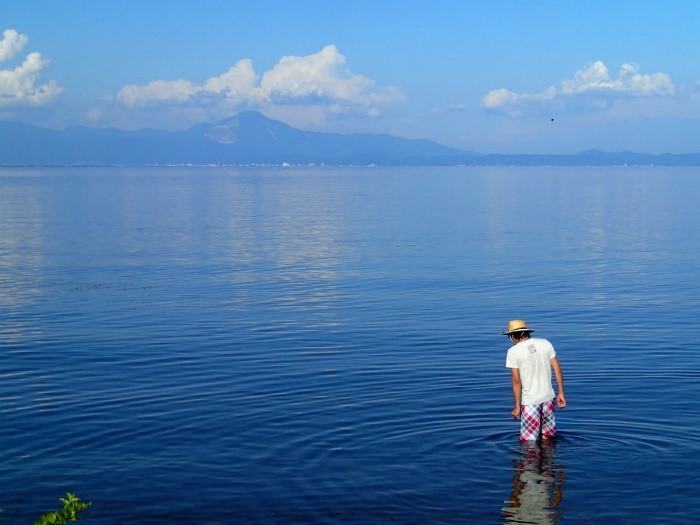
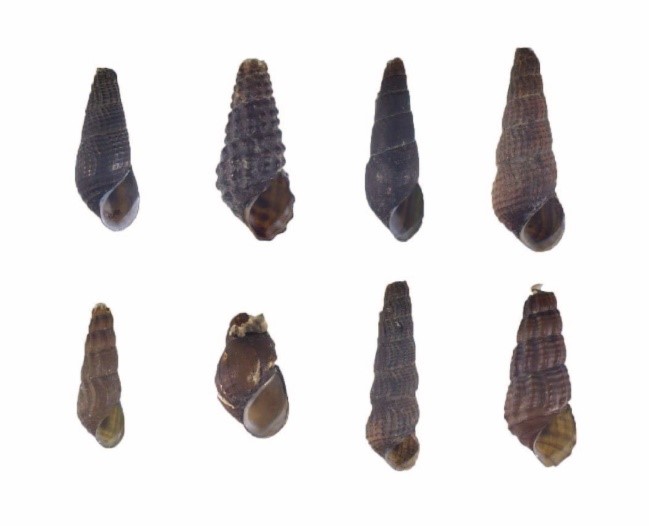
Lake Biwa is home to many endemic species. A prime example is the freshwater snail known as the Kawaniina. Although a wide variety of Kawaniina species inhabit Lake Biwa, their evolutionary history—including when and how they first appeared—has long remained a mystery.A research group led by Associate Professor Miura of the Faculty of Agriculture, Forestry and Marine Sciences has succeeded in solving this mystery by analyzing the genomic data of Lake Biwa’s Kawaniina species.The research revealed that the 15 species of freshwater snails endemic to Lake Biwa rapidly diversified within the lake starting 400,000 years ago, when the lake expanded rapidly, originating from two distinct lineages of freshwater snails. It is believed that the new environment created by the lake’s expansion served as the driving force behind the emergence of these new species of freshwater snails.The freshwater snails that underwent rapid adaptive radiation in Lake Biwa are expected to provide important clues for unraveling the mysteries of biological evolution.
These research findings were published on November 30, 2018, in the international scientific journal .
[Paper Title] Miura, O., Urabe, M., Nishimura, T., Nakai, K., and Chiba, S. (2018) Recent lake expansion triggered the adaptive radiation of freshwater snails in ancient Lake Biwa. Evolution Letters, doi: 10.1002/evl3.92.