Faculty of Science and Technology findings by an international collaborative research group led by Professor Takashi Nishioka Faculty of Science and Technology have been published in the scientific journal *Physical Review Letters*
Release Date:
A Paradigm Shift in the Phase Diagram of Strongly Correlated Electron Systems —Beyond the Doniack Phase Diagram, Which Has Been in Use for Half a Century—
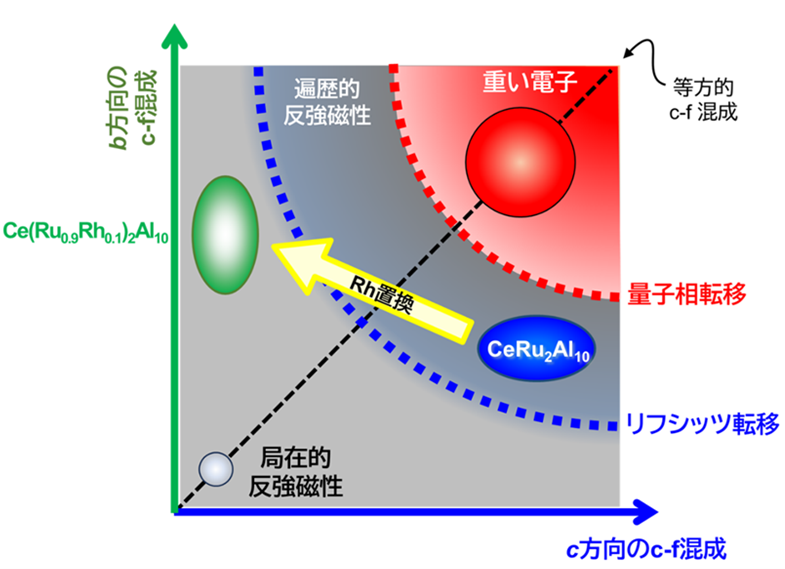
Hitoshi Yamaoka, Visiting Researcher at the Beamline Infrastructure Group, Physics and Chemistry Division, Synchrotron Radiation Science Center, RIKEN; Hiroshi Tanida, Associate Professor at the Center for Liberal Arts Education, Toyama Prefectural University of Technology Faculty; Ike Schwier, Assistant Professor (at the time of the research) at the Hiroshima University Institute for Synchrotron Radiation Science (HiSOR);Assistant Professor Shiv Kumar (at the time of the research), Technical Specialist Shoji Arita, and Professor Kenya Shimada (Director of the Institute for Synchrotron Radiation Science at the same university); Kwansei Gakuin University student Yoshiya Yamamoto Graduate School(at the time of the research), Professor Junichiro Mizuki; Kochi University student Shiro Tajima Graduate School(at the time of the research),Kenta Onodera Graduate School(at the time of the research), Professor Takashi Nishio, and others in an international collaborative research group have investigated a Kondo semiconductor [2] Ce( Ru1-xRhx ) 2Al10, which exhibits a strange anisotropy (where magnetic order does not occur in the direction where magnetization is most likely to arise). The findings obtained in this study qualitatively extend, based on experimental results, the most fundamental and iconic concepts describing the characteristics of strongly correlated electron system compounds.This deepens our understanding of the diverse properties exhibited by strongly correlated electron system compounds, providing a unified understanding of these phenomena as well as guidance for the discovery of new materials and theoretical research. Since this concept is fundamentally linked to the basic principles of quantum mechanics—such as the particle and wave nature of electrons—the impact of these findings is expected to extend far beyond condensed matter physics and be widely applied across a broad range of fields, including both basic and applied research.
This study was published in the online edition of the scientific journal *Physical Review Letters* (December 24, 2025).
A High-Dimensional Phase Diagram for the Newly Proposed Anisotropic c-f Hybrid Structure
[1] Antiferromagnetic order A state in which the spins of neighboring electrons are aligned in opposite directions, resulting in no net magnetization (due to the quantum mechanical nature of spin, it can only take on an up or down state; when spins are aligned in the same direction, the material behaves like a magnet).
[2] Kondo Semiconductor A group of materials that exhibit a bandgap at low temperatures due to strong electron correlations and thus display semiconducting behavior. When the bandgap is large, these materials are called Kondo insulators. The name “Kondo” derives from Dr. Jun Kondo, a Japanese physicist who was the first in the world to elucidate the mystery of the “minimum electrical resistance phenomenon in metals,” which is closely related to the origin of this property.It is one of the most famous physical phenomena in the world of physics named after a Japanese individual.
[3] 4f electron An electron occupying an orbital with orbital angular momentum L = 3 among the possible electron orbitals. In rare earth elements such as cerium (Ce), the 4f electrons, which occupy orbitals very close to the nucleus, become unpaired electrons and are responsible for magnetism.
[4] c–f mixing This term refers to the effect of mixing between conduction electrons and f-electrons, the resulting mixed state, or simply the interaction between conduction electrons and f-electrons. Various phenomena, such as magnetic order, the Kondo effect, and the heavy-electron state, originate from this.
[5] Phase diagram A phase diagram that shows the phases and states of a substance as functions of temperature, pressure, composition, and other factors.